
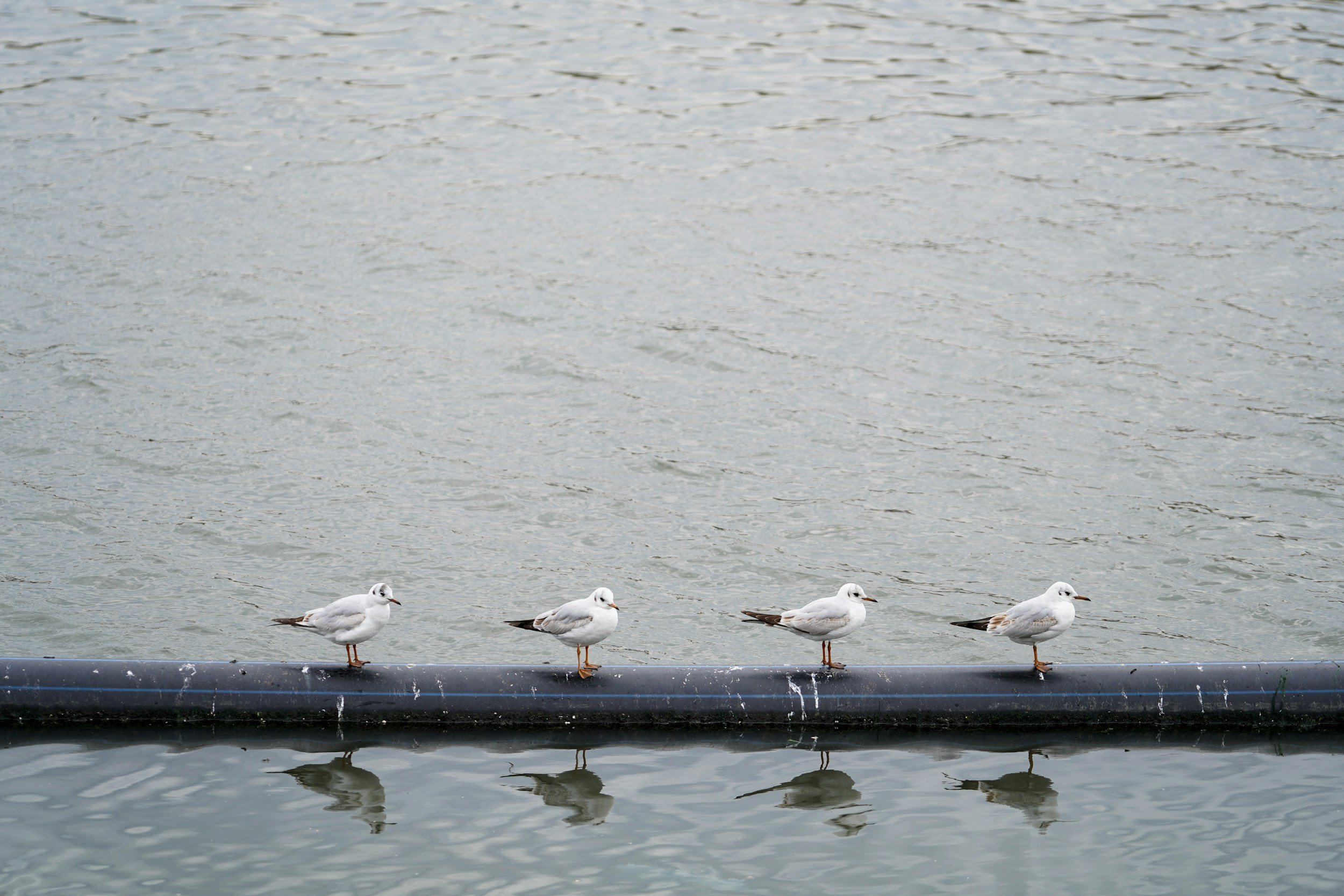
Bird Behavior & Habitat
A comparison of species behavior in multiple locations
“The observation of birds may be a superstition, a tradition, an art, a science, a pleasure, a hobby, or a bore; this depends entirely on the nature of the observer.”
Watching Birds, James Fisher (1941)
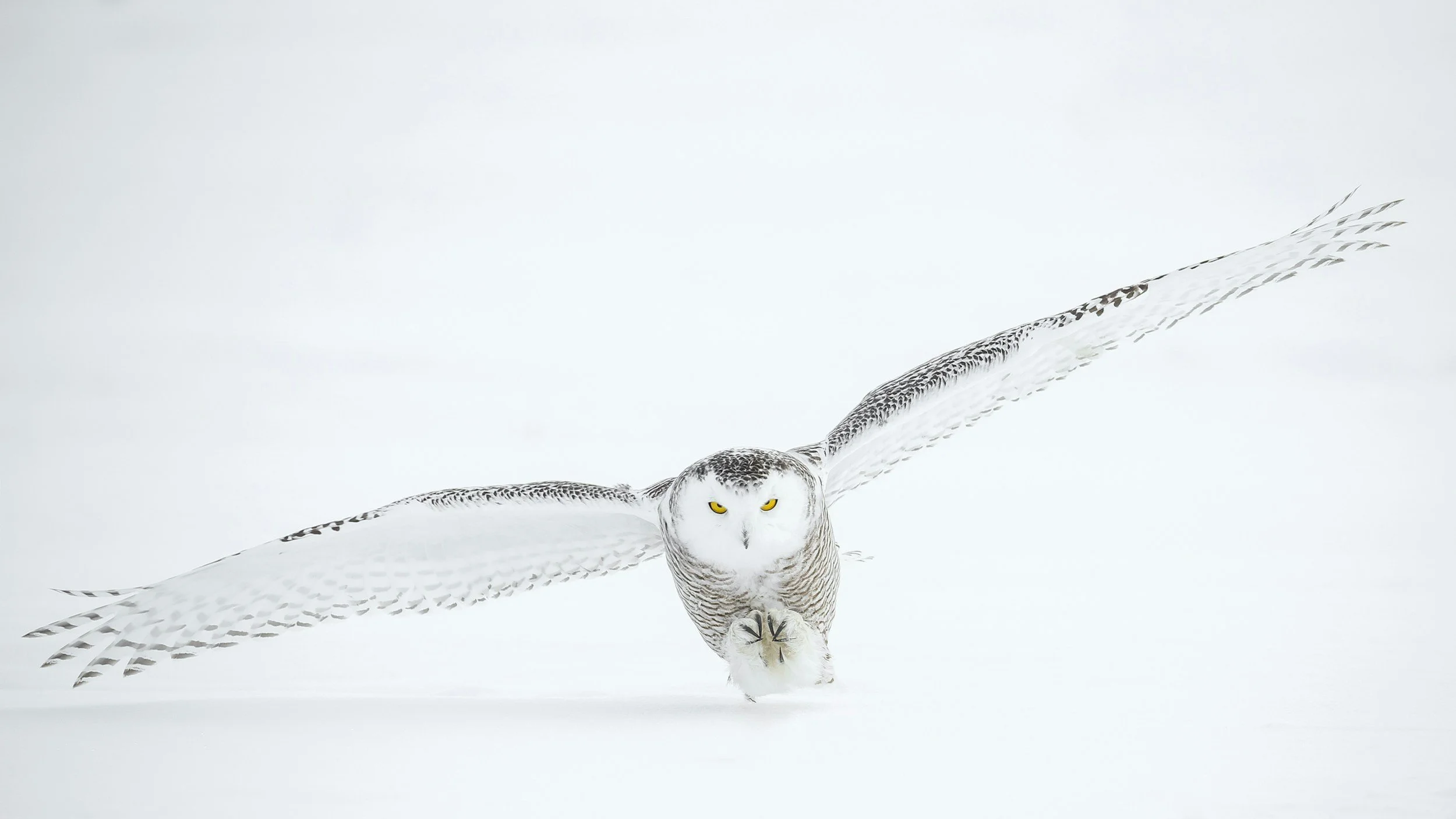
Our ancestors' interest in birds centered around three beliefs, birds as objects of religious worship or superstition, as a source of ornament or decoration, or as a source of food on the table (Moss, 2004). Reverend Gilbert White would introduce bird watching as a true pastime in the mid-eighteenth century. Considered by many to be a groundbreaking book, The Natural History of Selborne, is a result of White's accurate observations and genuine love of birds. He brought attention to the profound connection that exists between humans and nature.
Frank Gill, an American ornithologist, wrote that the degree to which behavior is social or asocial and cooperative or competitive is primarily determined by a living creature's priorities, mainly food and protection, being met (Gill, 1991). With this in mind, I decided to observe bird behavior in three locations: (1) my backyard, (2) a public park, and (3) my office park (Figure 1).
The comparative question: When comparing a public park, my backyard, and an office park, where will birds exhibit the widest variety of behaviors?
The prediction: Birds will exhibit the widest variety of behavior in the public park.
ARTICLE REFERENCES
Aldi Grocers. (2020). Corporate responsibility https://corporate.aldi.us/en/corporate-responsibility/environment/food-waste-recovery/
Apple Rabbit. (2020). http://applerabbit.org/
Darden Restaurants, (2020). http://servingfoodsolutions.com/the-solutions/restaurants/darden-restaurants/
Economic Research Service (USDA). (2017). Food Security in the U.S.: Key Statistics & Graphics. https://www.ers.usda.gov/topics/food-nutrition-assistance/food-security-in-the-us/key-statistics-graphics.aspx
Environmental Protection Agency (EPA). (2015). EPA urges public to reduce food waste. https://eponline.com/articles/2015/11/12/epa-urges-public-to-reduce-food-waste.aspx
Fox, Nick & Ward, Katie. 2007. Appetite Volume 50, Issues 2–3, March–May 2008, Pages 22-429. Health, ethics and environment: A qualitative study of vegetarian motivations
Global Methane Initiative. (2019). https://www.globalmethane.org/
Gunders, Dana, Bloom, Jonathan, Berkenkamp, JoAnne, Hoover, Darby, Spacht, Andrea, & Mourad, Marie. (2017). Wasted: How America is losing up to 40 percent of its food from farm to fork to landfill. https://www.nrdc.org/sites/default/files/wasted-2017-report.pdf
Hannibal, Bryce & Vedlitz, Arnold. (2017). Throwing it out: Introducing a nexus perspective in examining citizen perceptions of organizational food waste in the U.S. Environmental Science and Policy. Volume 88, 63-71. https://www.sciencedirect.com/science/article/pii/S1462901117311395#bib0340
Kase, Lori Miller. (2018). It’s Time to Reinvent Food Waste! JSTOR Daily. https://daily.jstor.org/its-time-to-reinvent-food-waste/
Maynard, Lily. (2020). Pathways to conservation behavior change introduction. Video. https://www.youtube.com/watch?v=igOirxd_7Fg&feature=emb_title
Moriarty, Kristi (2013) Produced under direction of the U.S. Environmental Protection Agency (EPA) by the National Renewable Energy Laboratory (NREL) under Interagency Agreement IAG-08-0719 and Task No WFD3.1001. Feasibility Study of Anaerobic Digestion of Food Waste in St. Bernard, Louisiana A Study Prepared in Partnership with the Environmental Protection Agency for the RE-Powering America’s Land Initiative: Siting Renewable Energy on Potentially Contaminated Land and Mine Sites. https://core.ac.uk/download/pdf/188986377.pdf
National Conference of State Legislatures (NCSL). (2020). Fighting food waste. https://www.ncsl.org/research/environment-and-natural-resources/fighting-food-waste.aspx
Phelps, Edmund S. (2013). Mass Flourishing: How Grassroots Innovation Created Jobs, Challenge, and Change. Princeton University Press.
Sobal, Jeffery & Nelson, Mary Kay. (2003). Food waste. Solomon H. Katz (Ed.), Encyclopedia of Food and Culture, Charles Scribner’s Sons, New York, 28-29
Statista. (2017). Most commonly wasted food types in the U.S. https://www.statista.com/statistics/696123/americans-most-commonly-wasted-food-types-united-states/
Twachtman, Jack. (2019). Local nonprofit connects the dots between food waste and hunger. VOID. https://voidlive.com/local-nonprofit-connects-the-dots-between-food-waste-and-hunger/
U.S. Department of Agriculture. (2020) Food Waste FAQs. https://www.usda.gov/foodwaste/faqs
U.S. Food and Drug Administration. (2020). Video: https://www.fda.gov/food/consumers/food-waste-animations
U.S. Welfare (2017). Census Data
Vermont Department of Environmental Conservation (DEC). (2020). Vermont’s Universal Recycling Lawhttps://dec.vermont.gov/waste-management/solid/universal-recycling
Wartmann, Flurina M & Purves, Ross S. (2018). Investigating sense of place as a cultural ecosystem service in different landscapes through the lens of language. Landscape and Urban Planning Volume 175, 169-183. https://www.sciencedirect.com/science/article/pii/S0169204618300963
Wessels, T. (2013). The Myth of Progress: Toward a Sustainable Future. University Press of New England.
Young, William, Russell, Sally V., Robinson, Cheryl A., & Barkemeyer, Ralf. (2016). Can social media be a tool for reducing consumers’ food waste? A behaviour change experiment by a UK retailer. Resources, Conservation and Recycling. Volume 117, Part B, 195-203. https://www.sciencedirect.com/science/article/pii/S092134491630316.