
Return to Wild
Cause and Effect of the Widening Evolutionary Gap Between Humans and Non-humans
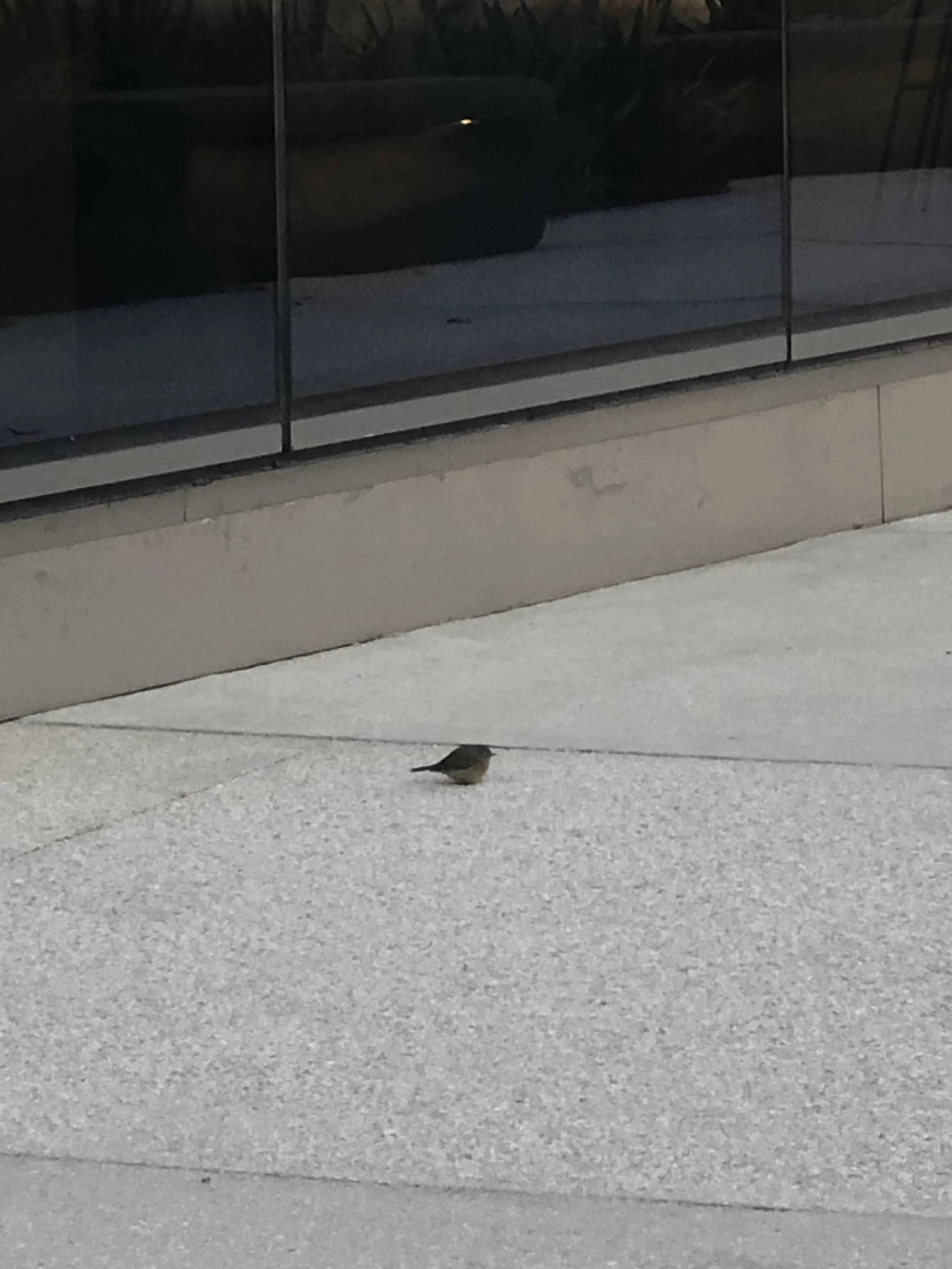
Writing about human evolution and our widening gap from nature was sparked by watching busy humans walk by an injured bird without noticing or caring to help. Compassion is part of our evolutionary history and has helped us survive. Do we still have compassion for those with whom we share this planet? I wanted to examine that theory and share research showing why we need compassion and a closer relationship with nature.
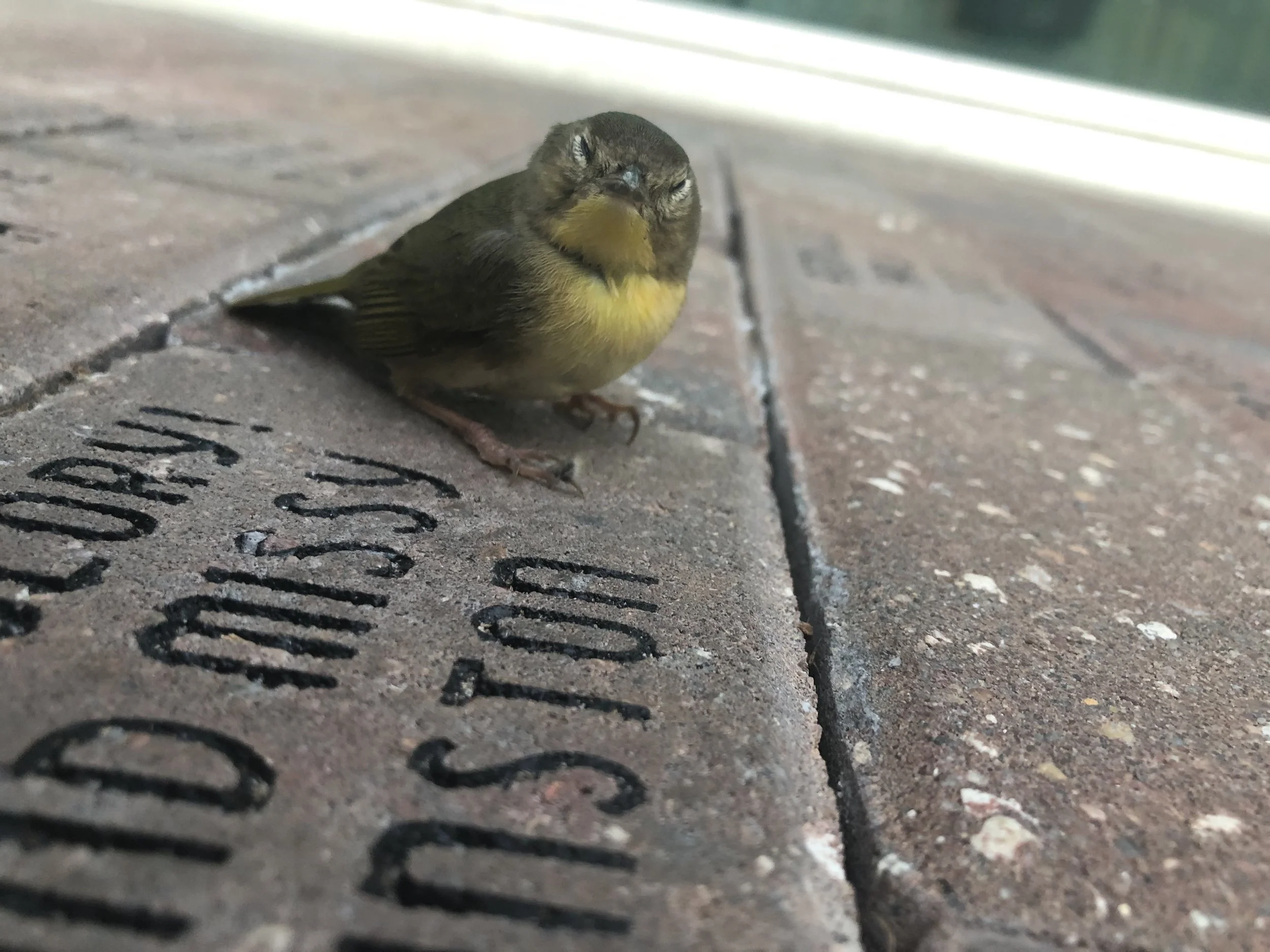
By the way, my friend and I rescued that little bird who collided with a window, and released her in a nearby park.
Throughout history, humans have evolved from a nomadic lifestyle to an urban lifestyle. As our lifestyles have evolved, so have our feelings toward non-humans. E.O. Wilson claimed biophilia, meaning the love of living creatures and their environment, is part of our evolutionary process and should not be ignored (Barbiero & Berto, 2021). Examining our evolutionary journey from the wild nature of the Paleolithic to the domestic nature of the Neolithic to the absence of nature in the Anthropocene can reveal why our relationship with non-humans matters.
In the late Pleistocene, which includes the middle and upper Paleolithic, humans created stone tools and lived as hunter-gatherers. During 95% of our evolutionary history, we traveled in small, nomadic groups roaming vast savannahs and rarely encountering others.
Animals were not yet domesticated, but humans admired wildlife while experiencing a healthy fear necessary for survival. Living a nomadic lifestyle meant a constant search for locations offering shelter and resources. An environment that serves our basic needs is essential for biophilia, which helps us recover from stress faster and may have provided an evolutionary advantage (Barbiero & Berto, 2021).
The Neolithic Era accounts for the next 5% of humanity's evolutionary history and is marked by the invention of agriculture and animal breeding (McHugo et al., 2019). Agriculture allowed for a less nomadic lifestyle. A less nomadic lifestyle led to smaller, stable villages with higher population density and frequent encounters with others. Selecting animals to domesticate for food and resources was our first step toward viewing domestic nature as good and shifting our attitude toward wild nature to bad (Barbiero & Berto, 2021). An example is how the dog evolved to be seen as good and the wolf as bad because the dog becomes essential to an agricultural lifestyle (Barbiero & Berto, 2021). Here, our gap with wild animals begins.
The next notable era is the Industrial Revolution. Humans experience spiraling population growth and the effects of urbanization. The gap between humans and wild animals increased and now includes domesticated animals (Barbiero & Berto, 2021). Domestic animals such as poultry, sheep, cattle, goats, and pigs are moved to closer quarters and raised in larger quantities in smaller quarters. In the 1920s, poultry is the first animal to suffer the fate of being factory-farmed.
While this era accounts for less than 0.1% of humanity's history, it is significant for our separation from nature.
Humans are now in the Anthropocene era. Over half of the world’s population lives in cities, and by 2050, the forecast shows nearly 70% of people will be living in urban locations (United Nations 2014). While humans continue replacing green space and forests with shopping centers, housing, and roads, habitat loss further diminishes the wild species. And, as the number of humans increases and non-humans decrease, concerns over our quality of life multiply (Warber et al., 2015). We are currently experiencing a significant gap between both wild and domestic nature.
Considering our evolutionary rift with nature, what are the consequences of continuing to ignore our love of living creatures and their environment?
Imagine it’s 7:00 on a Tuesday morning.
You are hustling along a busy sidewalk headed to work when, up ahead, you see a bird sitting on the pavement.
As people rush by, inches away from crushing her tiny body, she doesn’t budge.
You approach and discover she is injured; do you stop and help?
The story of the injured bird is a scene I witnessed earlier this year and offered an opportunity to show compassion for a species and its environment. Birds not only play a critical role in maintaining a healthy ecosystem by dispersing seeds and eating insects, but research also reveals when humans feed and watch birds, they experience powerful health rewards, such as a sense of calm (Cox, Gaston. 2016).
Since millions of birds are injured or killed every year from window collisions, responding to their concerns as our own could benefit the survival of both our species (Barbiero & Berto, 2021).
Moments like this matter, as further research reveals our lifestyles could be competing with our evolutionary makeup.
Our sedentary routines, combined with limited access to nature, are attributed to physical and mental illnesses such as asthma, anxiety, diabetes, and depression (Gelsthorpe, 2017). As the gap widens between our lifestyle and evolutionary makeup, the Mismatch Perspective examines how our evolutionary adaptations are incompatible with modern life (Li et al., 2020). Research suggests if we have spent 95% of our evolutionary history roaming the savannah as hunter-gatherers, sitting in an office all day is a mismatch for our evolutionary makeup. Understanding this mismatch can result in healthier lifestyles by integrating activities that better match our biological alignment (Li et al., 2020). Solutions to evolutionary mismatch can apply from making friends and eating a healthy diet to universal sustainability and global warming issues.
Another evolutionary theory is the phytophilic response module, which strongly supports the notion that many types of vegetation and vegetated settings stimulate human healing responses (Joye & van den Berg, 2011). The vegetation that solved our ancestors' food and shelter concerns can be linked to our positive reaction to nature today (Joye & van den Berg, 2011).
A closer look into human evolution can provide valuable clues to nature's psychological and physical benefits (Barbiero & Berto, 2021).
Biophilia's role in human evolution is sometimes questioned, but it is worth asking, "Where do most humans find relief from their stressful lifestyle"? Nature. Nature is often seen as a place to relax and heal from anxiety (Joye & van der Berg, 2011). People rent a cabin in the woods, practice yoga on the beach, go birdwatching, or kayak a river.
While Charles Darwin is best known for his theory of 'survival of the fittest,' he presented a more compassionate view on evolution in his later years. In Darwin's book, Descent of Man, he shared his belief that natural selection would favor "compassion and empathy toward all sentient beings" (Ekman, 2010). In our struggle for survival, the significance of those emotions cannot be overlooked. The evolutionary advantage of biophilia is similar in that humans will benefit from attention to non-humans (Barbiero & Berto, 2021).
Recent studies show that our evolutionary link between nature and health is gaining attention. Dr. Robert Zarr, a pediatrician in Washington, DC, prescribes physical activity in parks to treat obesity, diabetes, and mental health disorders (MacKinnon et al., 2019). Doctors in the UK refer people to Green Gyms to treat mental disorders and to promote physical activity. Green Gyms combine conservation volunteering with physical activity through planting trees (MacKinnon et al., 2019). However, we can only benefit from that walk in the park, paddling a river, or watching an eagle soaring high above by engaging empathy for all species.
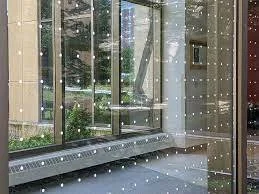
Reasons for hope are seen in the environmental concerns making their way into law. One study revealed public attitudes and legislation concerning wildlife management are showing a rise in protectionism (Butler et al., 2003). States are voting to reintroduce wolves, passing legislation for bird-safe buildings, and introducing dark sky lighting legislation for energy and environmental sustainability.
Policies surrounding conservation will happen if we can reduce our gap with nature, as people who value non-human species tend to exhibit pro-environment behavior (Restall & Conrad, 2015).
It would be ideal if future generations could look back and see the Anthropocene as the era when humans began their return to the wild. It was a time when our evolutionary path shifted to a healthier lifestyle. Let the Anthropocene be remembered as the era in which humans donated, volunteered, and worked with land trusts, habitat restoration projects, and local farmers. Let it be the time we raised our voices for those not heard through engagement, policy, and legislation at every level.
And, let this be the era when that little injured bird on the sidewalk is not ignored but shown compassion by not only one person but the entire community.
Infographic created by Kim Lamb
ARTICLE REFERENCES
Barbiero, G and Berto, R (2021) Biophilia as Evolutionary Adaptation: An Onto- and Phylogenetic Framework for Biophilic Design. Front. Psychol. 12:700709. doi: 10.3389/fpsyg.2021.700709
Butler, Jessica, Shanahan, James, and Decker, Daniel. 2003. Public Attitudes toward Wildlife are Changing: A trend analysis of New York residents. Wildlife Society Bulletin (1973-2006), Winter, 2003, Vol. 31, No. 4. pp. 1027-1036
Cox DTC, Gaston KJ (2016) Urban Bird Feeding: Connecting People with Nature. PLOS ONE 11(7): e0158717. https://doi.org/10.1371/journal.pone.0158717
Gelsthorpe J (2017) Disconnect from nature and its effect on health and Well-being: a public engagement literature review. Natural History Museum, London
Joye, Y., & van den Berg, A. (2011). Is love for green in our genes? A critical analysis of evolutionary assumptions in restorative environments research. Urban Forestry & Urban Greening, 10(4), 261–268. https://doi-org.proxy.lib.miamioh.edu/10.1016/j.ufug.2011.07.004
Li, N. P., Yong, J. C., & van Vugt, M. (2020). Evolutionary psychology’s next challenge: Solving modern problems using a mismatch perspective. Evolutionary Behavioral Sciences, 14(4), 362–367. https://doi-org.proxy.lib.miamioh.edu/10.1037/ebs0000207
MacKinnon K., van Ham C., Reilly K., Hopkins J. (2019) Nature-Based Solutions and Protected Areas to Improve Urban Biodiversity and Health. In: Marselle M., Stadler J., Korn H., Irvine K., Bonn A. (eds) Biodiversity and Health in the Face of Climate Change. Springer, Cham. https://doi.org/10.1007/978-3-030-02318-8_16
McHugo, G.P., Dover, M.J. & MacHugh, D.E. Unlocking the origins and biology of domestic animals using ancient DNA and paleogenomics. BMC Biol 17, 98 (2019). https://doi.org/10.1186/s12915-019-0724-7
Restall, Brian & Conrad, Elisabeth. 2015. A literature review of connectedness to nature and its potential for environmental management, Journal of Environmental Management, Volume 159, Pages 264-278, ISSN 0301-4797. https://doi.org/10.1016/j.jenvman.2015.05.022.
United Nations (2014) World urbanization prospects, 2014 revision. https://esa.un.org/unpd/wup.
Warber, S. L., DeHudy, A. A., Bialko, M. F., Marselle, M. R., & Irvine, K. N. (2015). Addressing "Nature-Deficit Disorder": A Mixed Methods Pilot Study of Young Adults Attending a Wilderness Camp. Evidence-based complementary and alternative medicine : eCAM, 2015, 651827. https://doi.org/10.1155/2015/651827